
“Sound an alarm with the trumpets.” Numbers 10:9
Every September-October, the Jewish community comes together to celebrate Rosh Hashanah (“head of the year”) more commonly known as the Jewish New Year. Occurring on the first day of the month of Tishri, Rosh Hashanah is one of three High Holy Days on the Jewish calendar. The Old Testament sabbatical and jubilee years are based on it (Leviticus 25:8-22), plus it marks the beginning of “Ten Days of Repentance,” ending on Yom Kippur, the Day of Atonement.
Many events surround this special day. People typically celebrate by abstaining from work, fasting, attending religious services, volunteering in the community, and holding family gatherings.
However, many are unaware that Rosh Hashanah is alternately called the Day of Judgment or the Day of Trumpets and points to a more spectacular future event—the second coming of Jesus Christ.
Babylonian Influence
God’s designation of Rosh Hashanah (Shabbaton Zichron Teruah) and all the Jewish biblical feasts are found in the book of Leviticus.
“Then the LORD spoke to Moses, saying, ‘Speak to the children of Israel, saying: ‘In the seventh month, on the first day of the month, you shall have a sabbath-rest, a memorial of blowing trumpets, a holy convocation.’” (Lev 23:23-24)
Though the Jews celebrate Rosh Hashanah as the beginning of a new year, it is not the first day of the Jewish calendar. That occurs in the spring in the month of Nisan (March-April), two weeks before Passover. Regardless, Jews celebrate Rosh Hashanah as a new year due to rabbinic culture, which some attribute to the Jewish time of exile in Babylon.
The Babylonians happened to celebrate their new year during the seventh month of the Jewish calendar, which the Babylonians called Tishri. In Akkadian (Babylonian language), Tishri means “beginning.” This may be why (though not conclusively) the seventh month of the Jewish calendar is also called Tishri, and their celebration is called Rosh Hashanah, the “head of the year.”
Some may claim that Rosh Hashanah also appears in Ezekiel 40:1 and establishes it as a High Holy Day. However, the prophet Ezekiel refers to the beginning of a year and not a holiday.
For Orthodox Jews, Rosh Hashanah (Tishri 1) is not about celebrating a new year, but the time when God created the world. Evidence does not exist to support this belief. Nevertheless, many serious Orthodox Jews celebrate Rosh Hashanah in commemoration of Genesis 1.
The Jewish Day of Trumpets
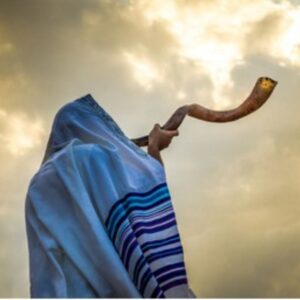
Despite the name, the Jewish people do not blow a trumpet but a traditional shofar, a hollowed-out ram’s horn, on Rosh Hashanah. It is blown 100 times throughout the day, even during worship services. Rabbinic tradition (not Scripture) dictates that the Israelites blew a shofar the day God gave the Torah to Moses on Mount Sinai.
Today, blowing a trumpet on Rosh Hashanah symbolizes a call to repentance, mourning over one’s sins, and rededication of one’s faith as well as an acknowledgment God’s gift of the Torah. Each has its own “call.” As a result, rabbinic tradition refers to the holiday as the Day of Trumpets, or Yom Hateruah, “a memorial of blowing trumpets,” as mentioned in Leviticus 23.
But the rabbis do not blow trumpets only on Rosh Hashanah. God also commands it as a form of communication.
Types of Trumpet Calls
“And the LORD spoke to Moses, saying, ‘Make two silver trumpets for yourself. You shall make them of hammered work.” (Num 10:1-2)
In Numbers 10, God commands Moses to forge two silver trumpets for two specific purposes: (1) to call the Israelite camp together and (2) to direct their movements whenever the priests sent them out. The priests blew the trumpets in a precise way, according to each unique instruction.
Blowing a trumpet with a long, steady sound meant the congregation (all the adult males) should gather at the door of the tabernacle of meeting. But if the priests only blew one horn, only the leaders of the tribes should gather (Num 10:4).
Conversely, when it was time for the Israelites to continue their journey in the wilderness, the priests blew the trumpet three short times to signal the tribes on the east side of the camp (Judah, Issachar, and Zebulun) to move. A second trumpet blast signaled the tribes on the south side (Reuben, Simeon, and Gad) to move (Num 10:5-6).
[Click Here to Hear the Different Shofar Sounds]
The priests also blew trumpets at the beginning of each month and over their burnt and peace offerings to God (v10). When it was time for war, the priests blew them as an alarm, in which case God made a unique promise.
“When you go to war in the land against the enemy who oppresses you, then you shall sound an alarm with the trumpets, and you will be remembered before the LORD your God, and you will be saved from your enemies.” (Num 10:9)
God promised the Israelites that He would save them from their enemies when they blew the trumpets. As such, Numbers 10 ties back into Leviticus 23 and Rosh Hashanah, the Day of Trumpeting. And like all Jewish holiday feasts, it also points to Jesus.
Sending Out the Armies
Recall that Numbers 10 commands the priests to blow a trumpet both to gather the people and to send them out. In the last days—and many people speculate on Rosh Hashanah—a trumpet will sound again.
At that time, the Lord Jesus will stand on the Mount of Olives and send out the heavenly armies comprised of both angels and “holy ones”—raptured believers who return with Him to conquer the antichrist and save Israel.
“Thus, the LORD my God will come and all the saints with You.” (Zech 14:5)
“Then the LORD will go forth and fight against those nations as He fights in the day of battle. And in that day, His feet will stand on the Mount of Olives, which faces Jerusalem on the east, and the Mount of Olives shall be split in two, from east to west, making a very large valley. Half of the mountain shall move toward the north and half of it toward the south.” (Zech 14:3-4)
“Then the seventh angel sounded [a trumpet]: And there were loud voices in heaven, saying, ‘The kingdoms of this world have become the kingdom of our Lord and of His Christ, and He shall reign forever and ever!’”
“And the armies in heaven, clothed in fine linen, white and clean, followed Him on white horses.” (Rev 19:14)
The seventh and last trumpet sound, occurring at the end of the Tribulation, will announce Jesus’ imminent return, His second coming, and His coronation as the eternal King. Shortly after, He will defeat His enemies, including Satan, and establish His messianic kingdom.
Like the angels, when we blow the trumpet, we not only call on God to gather the saints but also for Him to send out His armies and save us (Num 10:9). For now, we blow the trumpet in expectation and anticipation for Jesus’ glorious return.
Joel’s Prophecy
Many biblical prophecies, including the book of Joel, foretell events that will occur during the end times. Joel’s prophecy is especially jarring.
“Blow the trumpet in Zion and sound an alarm in My holy mountain! Let all the inhabitants of the land tremble, for the Day of the LORD is coming, for it is at hand: a day of darkness and gloominess; a day of clouds and thick darkness like the morning clouds spread over the mountains. A people come, great and strong, the like of whom has never been, nor will there ever be any such after them, even for many successive generations.” Joel 2:1-2
The prophet describes an enormous swarm of locusts that will descend on Judah in the last days as a direct judgment from God (see also the Fifth Trumpet Judgment in Revelation 9:1-11). While he foretells a literal invasion of giant locusts, the illustration of locusts also conveys misery and catastrophe, a common expression in the Old Testament.
Notice the specific command to “blow the trumpet.” Later in verse 15, God again commands the people to “blow the trumpet in Zion” and to fast and pray. Verse 18 then promises God will be zealous for His land and take pity on His people. By the end of the book of Joel, God pours out His Spirit and blesses His people.
God promises to save His people, but first they must “blow a trumpet” and call out to Him.
New Testament Trumpets
The apostle Paul also mentions blowing trumpets in the New Testament that point to what many call the “rapture.”
“We shall not all sleep, but we shall all be changed—in a moment, in the twinkling of an eye, at the last trumpet. For the trumpet will sound, and the dead will be raised incorruptible, and we shall be changed.” (1 Cor 15:51-52)
“For the Lord Himself will descend from heaven with a shout, with the voice of an archangel, and with the trumpet of God. And the dead in Christ will rise first. Then we who are alive and remain shall be caught up together with them in the clouds to meet the Lord in the air. And thus, we shall always be with the Lord.” (1 Thess 4:16-17)
This trumpet sound is a separate event from the one sounded at Jesus’ return. Scholars have differing opinions of when each event will happen. Regardless, God promises in His word that we will hear a trumpet when the Lord raptures (Heb, harpazo, “caught up”) His church and again at His second coming.
At the Midnight Cry
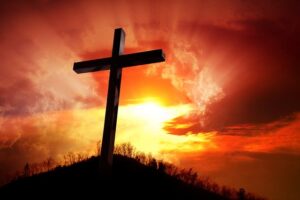
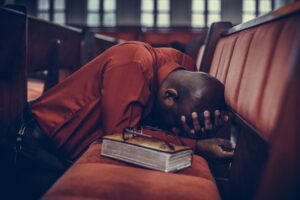
Blowing a trumpet is a traditional part of Rosh Hashanah. It is not only a call to pray, repent, and study God’s word but also a cry for God to deliver and save us from our enemies. As believers in Christ, we know Jesus’ blood shed on the cross covers our sin. We only need to blow our trumpet, i.e., cry out to Him for salvation and receive His gift of abundant, overflowing, saving grace.
We can also look forward to the day when heavenly trumpets will announce a series of events: the rapture of believers, the Lord’s return, and the sending out His heavenly armies to save many from the clutches of evil to bring them into His kingdom.
A trumpet sound may occur on Rosh Hashanah, or it may not. Jesus says that not even He knows the day or hour (Matt 24:36). Either way, we must be ready for it. Those who are not will, unfortunately, suffer severe consequences.


