“I will declare the decree: The LORD has said to Me, ‘You are My Son. Today, I have begotten You.’”
At first glance, Psalm 2:7 appears to declare the moment when Jesus comes into existence. However, many preachers have taught that Jesus has always existed. So, what could Psalm 2:7 mean? Is this when Jesus was born? Was He begotten by God? John 3:16 seems to confirm this view.
“For God so loved the world that He gave His only begotten Son.”
“Begotten” is not a common term today, so it is often misunderstood.
Psalm 2:7 describes Jesus’ coronation and refers to what scholars theologically call “Incarnational Sonship.” In the ancient Near and Middle East, a king was declared “begotten” when he assumed his throne and entered his kingship. This similarly applies to Jesus when He entered His Sonship and place of divine authority.
More importantly, Incarnational Sonship is also the Father’s Old Testament, prophetic declaration that Jesus is the promised Messiah. The angel Gabriel later announced this to Mary in Luke 1:32-33 of the New Testament.
“He will be great and will be called the Son of the Most High, and the Lord God will give Him the throne of His father David. He will reign over the house of Jacob forever, and His kingdom will have no end.” (CSB)
John the Baptist repeated the declaration at Jesus’ baptism in Luke 3:22, then Jesus Himself confirmed it at His resurrection. Therefore, Psalm 2:7 records God the Father officially proclaiming that Jesus is the promised Messiah and His Son.
The Eternal Son
Notice the word “today” in Psalm 2:7. As used here, this word is often mistranslated and does not carry the meaning we understand in English.
The original Hebrew word is yome, and it has varying meanings, including literal days, months, and years, as well as figurative spans of time. Here in Psalm 2:7, it means a “point in time.” It also means “everlasting,” “perpetual,” and “prolonging.” Taken together, “today” indicates an ongoing event.
For God to declare, “Today, I have begotten You,” means Jesus has always been and always will be. He is everlasting and perpetual throughout time, and so is His relationship with the Father. The fulfillment of their redemption plan was decreed in eternity past, and it is demonstrated and affirmed in Jesus’ incarnation.
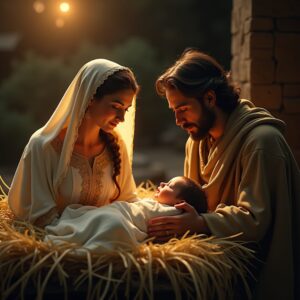
Jesus is eternal, and the day of His incarnation as the promised Messiah was yome, the “point in time” when God fulfilled His promise from Psalm 2:7, and Jesus stepped fully into His Sonship (see Luke 2).
Confirming Jesus’ Sonship
The Psalms are not the only portions of Scripture that verify who Jesus is.
In the New Testament, Hebrews and Acts both confirm that Jesus is indeed the Messiah and the divine Son of God. Both passages uniquely refer to Psalm 2:7.
Hebrews 1:5, “For to which of the angels did [the Father] ever say, ‘You are My Son; Today I have become Your Father,’ or again, ‘I will be His Father, and He will be My Son?’ Again, when He brings His firstborn into the world (i.e., onto the earth), He says, ‘And let all God’s angels worship Him.’” (CSB)
This is shocking language for a first-century reader, yet it declares the truth. Jesus was not just a man. While He walked the earth, He was fully human but also still fully divine, one who is superior in nature to the angels because of His Incarnational Sonship.
Acts 13 also confirms Jesus’ Sonship by referring to His divine resurrection and the fulfillment of God’s promise in Psalm 2:7.
Acts 13:33-34, “God has fulfilled this for us, their children, by raising up Jesus, as it is written in the second Psalm: ‘You are My Son; Today, I have become Your Father.’ As to His raising Him from the dead, never to return to decay, He has spoken in this way, ‘I will give You the holy and sure promises of David.’” (CSB)
Hebrews 1 and Acts 13 both prove the truth of Psalm 2:7. Jesus was never born or “begotten” but has been with the Father from everlasting past, and He will be to everlasting future. Further, He is seated on the throne of heaven at the Father’s right hand, ruling in the fullness of His Sonship, having fulfilled His work of overcoming sin.
1 Peter 3:22, “Who has gone into heaven and is at God’s right hand—with angels, authorities and powers in submission to him.” (ESV, see also Mk 16:19; Rom 8:34; Eph 1:20; Col 3:1; Heb 1:3, 13)
Jesus is forever the Messiah, the divinely crowned Son of God, and the hope of our salvation.
“All who take refuge in Him are happy.” (Ps 2:12)


